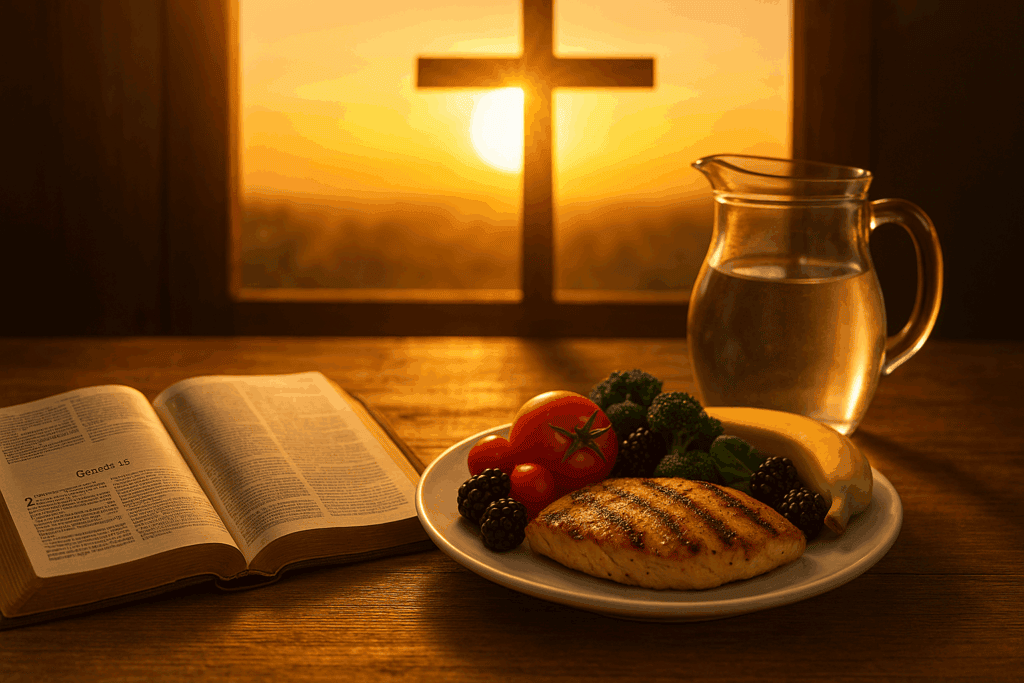
Fruit takes a lot of blame on a weight-loss plan. “Too much sugar,” the thinking goes. “Cut it and watch the scale move.” That advice skips past both the research and the diet God handed Adam in the first chapter of the Bible.
The best fruits for weight loss are high in fiber and water and low in calorie density — think berries, apples, pears, grapefruit, and watermelon. A 24-year Harvard-affiliated cohort study found each daily serving of fruit was linked to about half a pound less weight gain over a four-year period, the strongest effect of any food category studied. Genesis 1:29 already put fruit at the center of the human diet; the research just confirms why.
What Genesis 1:29 Already Told You About Fruit
Fruit isn’t a modern diet hack. It’s original equipment. Genesis 1:29 names “every tree that has fruit with seed in it” as food given directly to Adam and Eve — the second category, right alongside seed-bearing plants (see Seed-Bearing Plants: The Original Diet God Gave Adam).
By the time Israel reaches the Promised Land, fruit is still the marker of abundance. Deuteronomy 8:8 describes the land itself by its fruit: “vines and fig trees and pomegranates,” on top of grain and olive oil. Solomon later pictures delight the same way — sitting in the shade of an apple tree, its fruit “sweet to my taste” (Song of Solomon 2:3, NIV). Fruit wasn’t an afterthought in Scripture. It was proof God had provided well, and something to be enjoyed, not just endured.
What the Research Actually Found
A landmark study followed 133,468 people for up to 24 years, tracking how changes in specific foods lined up with weight change every four years (PLOS Medicine, 2015). Fruit came out on top of every food category tested: each additional daily serving was tied to about 0.53 lb less weight gain per four-year period.
Compare that to starchy vegetables. Corn was linked to over 2 lbs of gain per serving in the same study. Peas added over a pound. The lesson isn’t “all plants are equal for weight loss” — it’s that fruit specifically earns its place on the plate, and not every plant food is interchangeable with every other.
That result held up across three separate long-running groups of people, not just one small sample — the kind of scale that makes a nutrition finding worth building a habit around, not just a headline worth skimming.
The Top Fruits for Weight Loss, Ranked by What Matters
Not all fruit pulls equal weight. The ones that help most combine high fiber with low calorie density — filling you up without stacking calories.
| Fruit | Fiber | Calories | Why It Works |
|---|---|---|---|
| Raspberries | ~6.5g per ¾ cup | ~65 | Highest fiber-to-calorie ratio of any common fruit |
| Pears | ~5-6g per medium | ~100 | One of the highest-fiber fruits you can eat whole |
| Apples | ~4-5g per medium | ~95 | Soluble and insoluble fiber, skin included |
| Blueberries | ~3.6g per cup | ~85 | High fiber plus antioxidants (anthocyanins) |
| Grapefruit | ~2-4g per half | ~50 | High fiber for its size, naturally low in sugar |
| Watermelon | ~0.6g per cup | <50 | About 92% water — very low calorie density |
| Avocado | ~10g per fruit | ~240 | Higher calorie, but fiber and healthy fat make it very filling |
(Figures are typical per-serving values; see Nourish.)
None of this means the rest of the fruit aisle is off-limits. Oranges, strawberries, and papaya all bring real fiber and vitamin C to the table — they just don’t top the ranking on fiber-per-calorie the way raspberries and pears do.
How Much Fruit Is Too Much?
None. USDA’s MyPlate guidelines recommend about 2 cups of fruit a day on a standard 2,000-calorie diet — roughly two medium pieces of fruit, or the equivalent in berries or melon (Oklahoma State University Extension, citing USDA MyPlate). That’s a target to hit, not a ceiling to fear.
Where fruit does become a problem is in volume you wouldn’t eat if you had to chew it — a large smoothie with three servings blended in, or a steady diet of dried fruit and juice, which concentrate sugar and calories without the fiber and water that make whole fruit work.
Why Fiber Is the Real Mechanism
Fiber isn’t just a buzzword on the nutrition label. A five-year study out of Wake Forest found that every 10-gram increase in daily soluble fiber was linked to 3.7% less visceral fat accumulation — the deep abdominal fat most tied to metabolic risk (Wake Forest / ScienceDaily, 2011). Soluble fiber slows digestion, which means steadier blood sugar and less of the hunger spike that sends you back to the pantry an hour after eating.
That’s the mechanism behind the cohort study above. Fruit isn’t magic. It’s fiber and water doing exactly what they’re built to do — and it’s why a cup of raspberries fills you up in a way a cup of fruit snacks never will, even at similar calorie counts.
“Isn’t Fruit Just Sugar?” Answering the Objection
It’s a fair question, and it deserves more than “no, trust me.”
Whole fruit and fruit juice aren’t the same food, nutritionally speaking. Juicing strips out the fiber that slows sugar absorption in the first place — you’re left with concentrated sugar and none of the mechanism that made whole fruit work in the cohort study above. A glass of orange juice and an actual orange are not interchangeable, even though they came from the same tree.
Whole fruit, fiber intact, doesn’t spike blood sugar the way its stripped-down juice does. That’s not a reason to fear an apple. It’s a reason to eat the apple instead of drinking it.
The same logic applies to dried fruit. Drying concentrates the sugar into a much smaller volume — a quarter-cup of raisins packs the sugar of nearly a cup of grapes, without the water that made the grapes filling in the first place. Whole and fresh beats dried and concentrated almost every time weight loss is the goal.
A Cluster Worth Carrying: Fruit as Blessing, Not Guilt
When the twelve spies scouted the Promised Land, they didn’t come back with a soil sample. They came back with fruit — “a single cluster of grapes, which they carried on a pole between two men,” along with pomegranates and figs (Numbers 13:23, NIV). That cluster was evidence. It proved the land was everything God had promised.
Scripture never treats fruit as a guilty pleasure to manage. It treats fruit as a sign of provision. If you’ve been eyeing an apple with suspicion because a diet trend told you to, that’s worth reconsidering — not because discipline doesn’t matter, but because the thing you’re avoiding is the same thing God’s people carried home as proof of blessing.
That distinction matters for how you approach weight loss itself. Fear-based eating — treating every food as a threat to manage — isn’t the same as stewardship. Eating fruit with confidence, in a sensible amount, is closer to how Scripture actually frames it.
How to Build Fruit Into the Holy Diet
Fruit isn’t the whole plate — it’s one of five categories God named in Genesis 1:29, alongside vegetables, legumes, nuts, and seeds (see Seed-Bearing Plants and The Holy Diet). Aim for whole fruit over juice, and lean toward the higher-fiber options in the table above when weight loss is the goal.
Vegetables deserve the same closer look — that’s covered in an upcoming post specifically on the best vegetables for a biblical diet.
Why listen to me on this: I’m a certified personal trainer with nutrition and functional training certifications, and I’ve spent over a decade in the fitness industry building nutrition frameworks — including the Holy Diet and Temple Training system — directly from Genesis 1:29 and current research, not fad science.
If you want a structured way to put this into practice, start with the Kingdom Reset 5-Day Fast — free inside the Kingdom Gladiators Skool community. It’s the on-ramp most people use before building a full Holy Diet meal plan around foods like these.