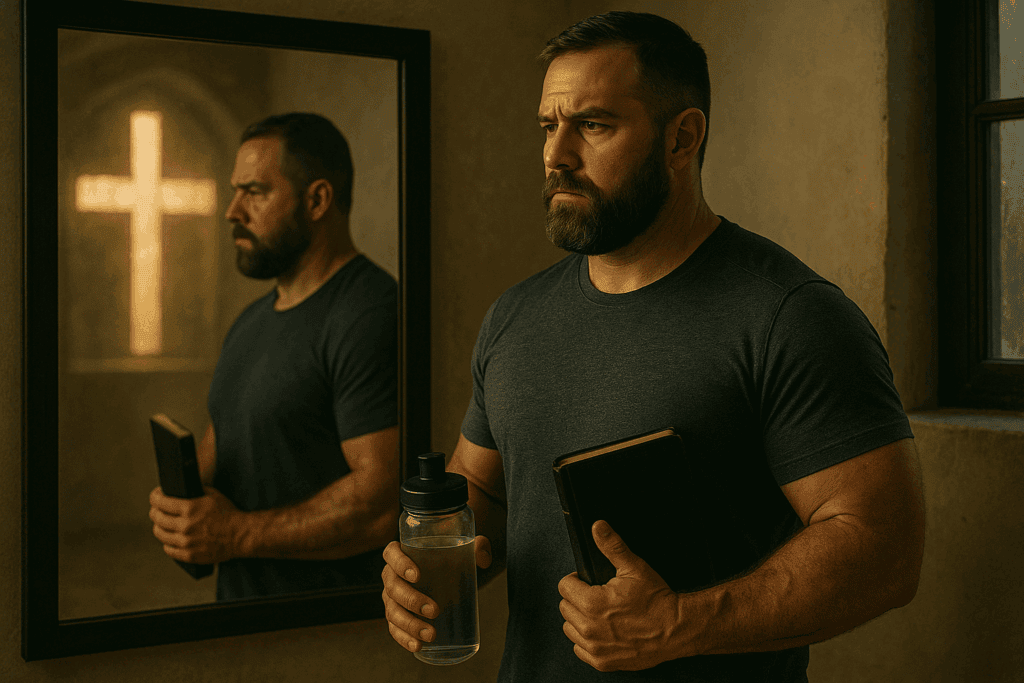
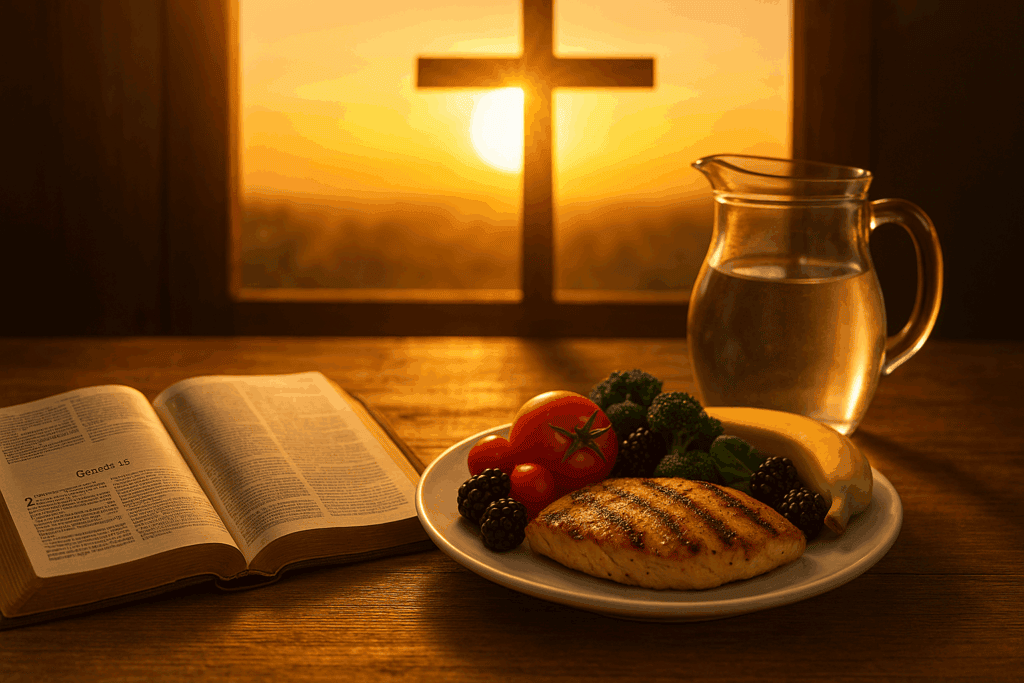
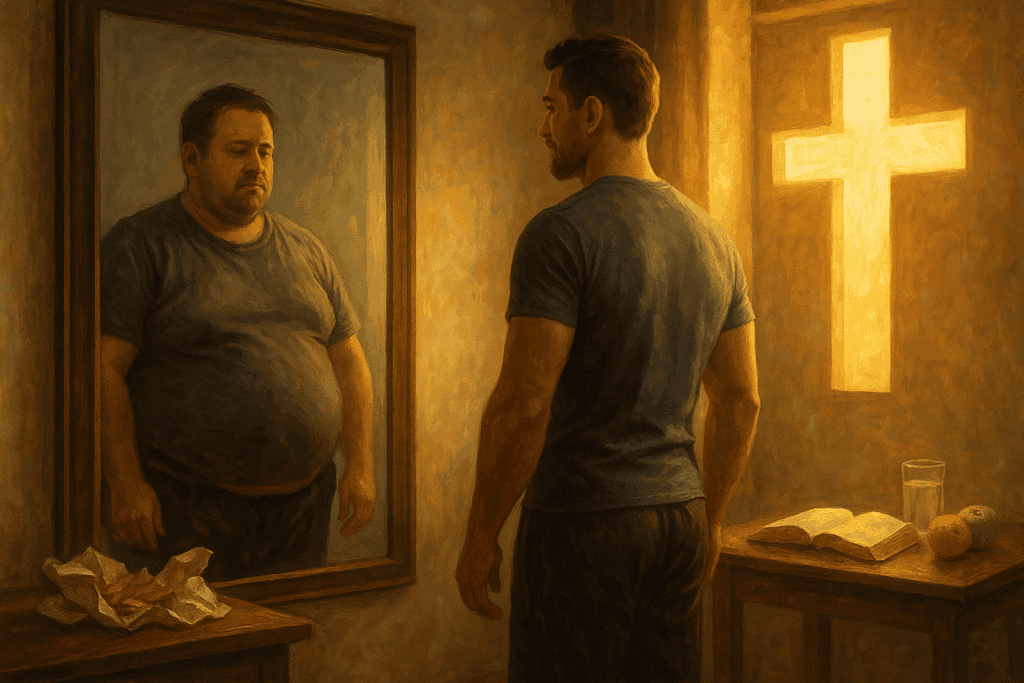
The first time someone told me my body was a temple, I nodded along in church. Then I went home and ate like it was a dumpster.
Treating your body as a temple means treating what you eat, how you move, and how you rest as worship. It’s obedience to God, not a vanity project or a willpower contest. It comes from 1 Corinthians 6:19-20, where Paul says your body isn’t fully your own. Christ bought you at a price, and your body now houses the Holy Spirit. In practice, that means stewardship instead of neglect, consistent obedience instead of a 12-week program. For me, the discipline that made this real instead of theoretical was fasting.
What “Your Body Is a Temple” Actually Means
The verse is 1 Corinthians 6:19-20: “Do you not know that your body is a temple of the Holy Spirit within you, whom you have from God? You are not your own, for you were bought with a price. So glorify God in your body.”
Paul wrote that specifically about sexual immorality in Corinth, not diet and exercise. Worth saying plainly, because half the content out there on this verse skips it to jump straight to fitness application.
But the principle underneath the specific warning holds up: your body isn’t fully yours to do with as you please. Christ bought it at a price, and it currently houses the Holy Spirit. That’s not a metaphor Paul invented for a sermon illustration. It’s a statement about ownership, and ownership changes how you treat something.
This isn’t Paul inventing a new idea either. Genesis 1:27 says God made man in His own image. Genesis 2:7 has Him personally forming Adam from dust and breathing life into him. Your body was never a biological accident to begin with. God formed it on purpose, by hand, long before Paul ever picked up a pen to write to the Corinthians. The temple language is Paul catching up to what Genesis already established. God made this body with intention, and intention implies care.
You don’t neglect what belongs to someone else. You don’t trash a rental car the way you might trash your own beater. Your body works the same way, except the owner is God. He’s not planning to give it back so you can wreck it in the meantime.
Why the Word “Temple” Specifically
Paul didn’t reach for a random metaphor here. In the Old Testament, the temple was the one place on earth where God’s presence actually dwelt among His people. It wasn’t decorative. Priests prepared for service in it and guarded what went in and out of it. They treated it as the most important physical space in the nation.
Paul is telling the Corinthians the same reality now applies to individual believers. You’re not managing a gym membership. You’re maintaining the place where God’s presence actually lives, in you, right now, today.
That’s a heavier claim than most fitness writers pulling from this verse ever unpack. It’s also why “just eat healthy, no need for all the biblical framing” undersells the actual point. The framing isn’t decoration on top of a health tip. The framing is the actual point, and the health habits are downstream of it.
Why This Isn’t About Vanity Or a Six-Pack
Most fitness content sells you on how you’ll look. Better mirror, better beach photos, better answer to “so what do you do to stay in shape.” None of that is evil, but none of it is the point either. Chasing it is exactly why so many programs don’t stick.
Secular fitness culture trains you for an audience. Temple stewardship trains you for a mission. One asks if you look impressive. The other asks if you can still do what God called you to do.
Picture two guys, both training hard for six months. One’s chasing a look, he wants people to notice when he walks into a room. The other’s chasing capacity. He wants to still chase his kids around the yard at 55. To have the energy to serve at church on a Saturday build day. Oh and to be present instead of gassed and irritable by 7pm on a Tuesday. Both guys might end up looking similar in the mirror. Only one of them has a reason to keep going once the compliments stop.
Secular fitness culture sells optimization for its own sake: more reps, better numbers, a body built for an audience. Mostly, that audience is strangers on a screen. That’s not nothing, but it’s a hollow finish line. It has no answer for why you’d keep going once nobody’s watching.
This is also why PKG isn’t built around a “get shredded by summer” pitch. Summer ends. Obedience doesn’t have a deadline.
The Difference Between Neglect and Stewardship
Here’s the uncomfortable part: most guys reading this already know what neglect looks like in their own life. You know you’re not sleeping enough. What you ate today wasn’t it. And the last time you moved your body on purpose instead of by accident.
That’s not an information problem. You’ve probably said some version of “I know what to do, I just don’t do it” out loud to yourself more than once. Knowing isn’t the missing piece. Doing is.
Stewardship isn’t a personality trait some guys have and others don’t. It’s a handful of boring, repeatable decisions. What you eat most days. None of it is complicated. All of it requires you to actually do it instead of researching it further.
What the Bible Actually Prescribes For the Body
Scripture isn’t silent on the specifics here, which surprises a lot of guys who’ve only ever heard “temple” used as a vague guilt trip.
Genesis 1:29 points toward seed-bearing plants, fruits, vegetables, beans, nuts, and seeds as the original design for food. God gave this to Adam before sin, sickness, or a single diet trend ever existed.
Leviticus draws clear lines around clean and unclean meat: no pork, no shellfish. Those rules predate modern food science by three thousand years. Modern food science has spent the last few decades quietly catching up to them.
The Gospels and Paul’s letters both treat fasting as a normal, expected rhythm for anyone following God. It’s not a fringe practice only for monks. Jesus assumes His followers will fast. He just tells them not to make a show of it (Matthew 6:16-18).
And the fourth commandment builds an entire day of rest into the weekly structure. It sits in the Ten Commandments right alongside murder and theft. That placement should tell you something: God takes rest seriously, a lot more seriously than most of us do.
Put together, that’s the actual scaffolding behind the Holy Diet. It’s also behind the fasting rhythm I still run today. I’ll go deep on the food side of this in its own post. This one’s about the principle underneath all of it: your body has a design, and the design comes with instructions. Most of us have never actually read them.
Rest as Stewardship, Not Laziness
Christian fitness content talks about fasting all the time. Rest almost never does, which is strange. God put it directly into the Ten Commandments, and most of us still treat it like an optional feature.
Most guys in this audience don’t have a rest problem because they’re lazy. They have a rest problem because they think stopping is the same thing as giving up. Busy feels like faithfulness. Rest feels like you’re not trying hard enough, at work, as a dad, as a man.
That’s backwards. God rested on the seventh day, not because He was tired. He built rest into the design from the start, before there was ever anything to recover from. If the God who spoke the universe into existence built in a stop, your body isn’t the exception.
Practically, this means actual sleep, not just fewer hours than you need plus caffeine to cover the gap. It means a weekly rhythm that includes one real day where you’re not grinding. That can be Sunday or another day that fits your life. Walking with God, the low-intensity daily cardio I built into PKG, works the same way. I frame it as devotional time, not just a calorie burn. Movement and rest aren’t actually opposites when you’re doing both on purpose.
This hits different for guys working a 9-to-5 than it did for people in agrarian cultures thousands of years ago. Your job doesn’t stop wanting more of you just because it’s Saturday. Email doesn’t rest on the seventh day. Building a real rest rhythm in a culture that treats constant availability as a virtue is its own act of obedience. It’s not just a nice idea.
What Fasting Actually Does To Your Body
I want to be honest about the science here instead of just asserting benefits. This audience has usually already tried enough diets to smell hype coming.
Fasting triggers autophagy, your body’s process for clearing out damaged cells. It also drops insulin and raises growth hormone during the fasted state (NCBI/PMC review, 2023). A 2025 human trial in The Journal of Physiology found something notable. Even time-restricted eating, a gentler form of intermittent fasting, measurably increased autophagic activity in real participants. That wasn’t just true in animal models (Bensalem et al., 2025). A 2022 randomized study found something similar. Fasting one day a week, when you stick with it, beat matched daily calorie restriction for weight loss in overweight adults (Nutrition Journal). Broader reviews link intermittent and periodic fasting to improved insulin sensitivity, better lipid profiles, and lower blood pressure (Annual Reviews, Cardiometabolic Benefits of Intermittent Fasting; Harvard T.H. Chan School of Public Health).
The Honest Caveats On Fasting Research
I’ll also give you the part most fasting content leaves out. Research on longer fasts shows a mixed picture on inflammation. Some studies show a temporary rise in inflammatory markers during the fast itself, normalizing after refeeding. Fasting isn’t a magic switch. It’s a legitimate, researched discipline with real effects, not a shortcut around eating well the rest of the time.
One study that stuck with me looked specifically at Greek Orthodox Christians observing traditional Holy Week fasting. It found real, measurable improvements in body composition and cardiometabolic markers (PMC, 2022). Religious fasting isn’t just a spiritual practice that happens to have side effects. The body responds to it directly.
None of this proves the theology. It just confirms that the discipline scripture already prescribed lines up with what modern research is still catching up to. That’s usually how it goes when you follow instructions from the God who designed the body in the first place.
My Own Practice: Why Fasting Is What Made This Real For Me
I can tell you exactly when treating my body as a temple stopped being just a phrase I heard in church. That’s when it started being something I actually lived out. It was when I started fasting on a real, repeated schedule instead of as a one-off.
Here’s what that looks like for me now: at least one full day of fasting every week. Then, at least quarterly, sometimes closer to every other month, a full five-day water-only fast. Not as a punishment, not as a crash diet before an event. As a rhythm.
I didn’t start at one day a week either. My first real fast was uncomfortable and short. I broke it early more than once before I built any real consistency. The rhythm I run now took time to build, the same way it will for anyone reading this.
That rhythm is what actually connected my faith to my fitness, more than any meal plan or workout split ever did. Fasting forces you to sit in discomfort on purpose and bring it to God instead of numbing it with the next meal. You can’t fake your way through a fast. You either do it or you don’t, and there’s something clarifying about a discipline that’s that binary.
The Kingdom Reset, the free 5-day water-only fast that opens PKG, is the on-ramp version of the exact practice I still run myself. I’m not asking anyone to do something I don’t do. I did it before it had a name, and I still do it now.
What This Actually Looks Like, Week to Week
Temple stewardship isn’t a personality overhaul. It’s a small number of repeated decisions you stack over time.
Food, most days: seed-bearing plants and clean meats, one serving of bread or pasta a day. Not a zero-carb rule, just a boundary instead of a free-for-all. Movement, daily: 20-40 minutes of low-intensity walking. I frame it as time with God instead of a workout to check off. Training, a few days a week: actual strength work, not endless cardio, because building muscle is stewardship too, not vanity. Fasting, weekly: one full day, at minimum. Rest, weekly: one real day that isn’t a grind. Protect it on purpose.
None of that is impressive on its own. That’s the point. Nobody sticks with impressive for long. Boring and repeatable is what actually changes a body over a year instead of over a hyped-up 8-week transformation photo.
If you’re keeping score, that’s five categories, not fifty rules. Most guys quit programs because there’s too much to track and too many ways to fail. This works because there’s almost nothing left to forget.
This Isn’t All Or Nothing
One warning, because I’ve watched guys torch this before it ever had a chance to work. Don’t treat day one like it has to be perfect, or you’ve already ruined the whole thing.
You will eat the wrong thing on a Tuesday, skip a fast you meant to do, and might sleep through the walk you planned. None of that means you’ve failed at treating your body as a temple. It means you’re human, which God already knew when He designed this in the first place.
The goal was never sinless nutrition. It was consistent obedience over a long enough timeline that the small decisions compound into an actual transformation. Miss a day, don’t miss two in a row, and keep going. That’s the whole strategy, and it’s the only one that’s ever actually worked, for me or for anyone I’ve coached.
Common Objections (And Why They Don’t Hold Up)
“Isn’t this just another diet with a Bible verse stapled to it?” No. Diets usually center on a macro trick or an elimination gimmick. This centers on obedience to a design that predates every diet trend by a few thousand years. The food specifics matter, but they’re downstream of the actual point.
“This sounds legalistic.” Legalism is earning favor with God through rule-following. This is the opposite: it’s honoring a God who already owns you and already loves you, not trying to win points. Nobody’s earning salvation with a five-day fast.
“I don’t have the discipline to fast.” You don’t need discipline to start. You need one day. Discipline is a byproduct of doing the thing repeatedly, not a prerequisite for starting it. Nobody has fasting discipline on day one, including me back when I started.
“What if I try this and it doesn’t work?” Define work. If work means the scale hits a specific number by a specific date, no program can honestly promise that. None should. If work means you become a man who eats, moves, and rests out of obedience instead of chaos, that’s not a maybe. That’s the direct result of doing the things above, consistently, starting today.
Where To Start Today
You don’t need to jump straight to a weekly fasting rhythm. I didn’t. The Kingdom Reset is a 5-day water-only fast, it’s free, and it’s the same starting point I used myself. I built it to be the first real step, not the whole plan.
The five days aren’t complicated. Water, prayer, and getting honest with God about what got you here. This surprises most guys: it’s less about willpower than they expected. It’s more about finally sitting still long enough to hear what they already knew.
If you’re reading this, you already know you’ve neglected your body more than you’ve stewarded it lately. This is the next obedient step, not a 12-week commitment you have to figure out in advance. You don’t need a plan for month three today. You need Monday.
Why Listen To Me
I’ve been a personal trainer since 2011 and worked in the fitness industry until 2024. For years I carried 30-40 pounds I wanted to lose myself, despite being the one training other people.
The idea for PKG came out of a church service. I was half-listening to a sermon, making a list of every diet my own clients were on. I realized if I wanted the “perfect” diet, I should ask the God who designed bodies in the first place. That question turned into real study of what scripture says about how we treat our bodies. PKG came out of that study.
I’ve done the Kingdom Reset myself and lost 13 lbs in 5 days. An earlier version of this approach took 22 lbs off me in 40 days. That was before Kingdom Reset and the Adam Fast existed as separate phases. I’m not writing this from the outside looking in. I’m not coaching anyone through anything I haven’t already put my own body through first. I still run the same fasting rhythm I’m describing here, every week.