
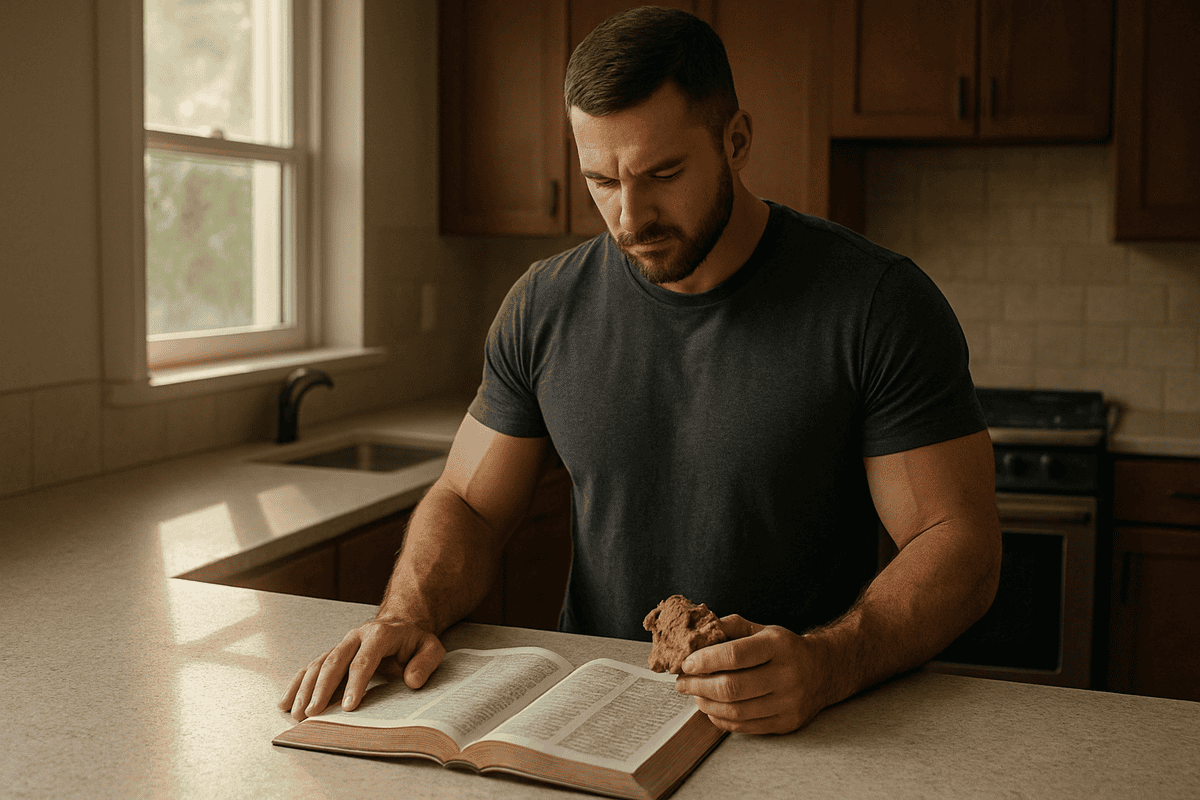
Bread sits at the center of the Bible. Culture once saw it as strength. Scripture used it to teach trust, blessing, and dependence on God. Families lived on it. Armies marched on it. Kingdoms shaped their daily life around it.
Modern men fear it. Diet books attack carbs. Fitness influencers preach restriction. Churches whisper debates. Confusion spreads until food feels like an enemy. Guilt tags along after every slice. Shame grows even faster than our waistlines.
My own life carried that same tension. Stress pulled me toward fast food. Exhaustion pushed me toward toast late at night. Reward drove me toward warm rolls at dinner. Each reason sounded harmless. Every bite felt comforting. All of it added up to a sluggish body and a dull spirit.
Ancient bread carried simple ingredients. Mills crushed whole grains with stone. Oil, water, and salt shaped the dough. Modern bread carries fillers, preservatives, and sugar. Factories pump out soft loaves that hit the bloodstream fast and hard. A food meant for strength now fuels cravings that weaken men.
Most guys know the cycle. One slice turns into three. One cheat day turns into a lost week. One moment of comfort turns into months of drift. Strength fades while discipline slips. Faith feels distant when the body stays stuck.
I want to bring clarity back. God gave bread for good. Men lost control when culture changed the recipe. Life gets simple when food returns to God’s design. Health turns when discipline rises. Faith grows when the body stops fighting against itself.
This path starts by facing the pain men feel every day around food, cravings, and control, so the next section walks straight into that struggle.
You’re Not Weak. You’re Worn Down.
Bread looks small, but the battle around it hits hard. Cravings rush in. Stress piles up. Exhaustion drains resolve. Food becomes the fast escape that quiets the mind for a moment. A man reaches for bread because he wants peace, not because he lacks strength. The real problem hides underneath the surface.
Life pushes men nonstop. Work drains energy. Family needs attention. Bills stack up. Schedules tighten. Pressure builds until the body grabs the quickest relief. Bread becomes the reflex. The brain wants speed, not wisdom. The heart drifts while the stomach makes the call.
Shame follows close behind. A man says he’ll stay strong tomorrow. He swears this will be the last time. Promising the pattern will end. Each promise breaks when stress hits again. Each break digs the hole deeper. Confidence fades as identity drifts. Faith grows quiet while frustration gets louder.
Fatigue pushes everything lower. Sleep gets shallow. Motivation drops. Hunger signals get confused. Blood sugar swings. Mood shifts fast. Focus slips at work. Patience shrinks at home. The body keeps struggling while the fuel keeps pulling it backward.
Spiritual life takes a hit too. Prayer loses fire when the body stays heavy. Scripture feels distant when the mind stays foggy. Discipline collapses when cravings lead. Bread stops acting like food and starts acting like a leash. A man wonders why he stays stuck, even though he loves God and knows better.
My own life followed that same path. Nights ended with mindless eating. Mornings started with regret. Days felt slow and tight. Discipline stayed on the bench while impulse ran everything. Change began only when I understood what bread, cravings, and God’s design were actually doing inside me.
This tension sets up the truth behind biblical bread, so the next section ties Scripture and science together to bring everything into focus.
Bread in God’s Story Isn’t the Bread in Your Pantry
Bread shows up early in the Bible. Genesis records God telling Adam he will eat by sweat and work. Exodus shows God raining manna from heaven to teach trust. Leviticus explains bread used in offerings. Jesus calls Himself the bread of life. Scripture uses bread to point to faith, provision, and dependence, not cravings or comfort. God never designed bread to control men. Culture changed the food, not the purpose.
“By the sweat of your brow you will eat your food until you return to the ground.” Genesis 3:19
Exodus 16:4 says, “I will rain down bread from heaven for you. The people are to go out each day and gather enough for that day.”
Leviticus 2:4–5 gives instructions for simple grain offerings made with flour, oil, and no junk.
“Give us today our daily bread.” Matthew 6:11
“I am the bread of life. Whoever comes to me will never go hungry, and whoever believes in me will never be thirsty.” John 6:35
Modern bread lost its simplicity. Companies pack dough with sugar, seed oils, gums, and preservatives. The body reacts fast. Blood sugar spikes. Insulin jumps. Hunger returns early. A cycle forms that drains mood, discipline, and energy.
Research confirms this. A 2018 Journal of Nutrition study showed refined grains hit blood sugar harder than whole grains. A 2020 PubMed study found high-fiber foods increase fullness. A 2019 Cell Metabolism study revealed ultra-processed foods cause people to eat over 500 extra calories a day without noticing. These patterns match the cravings many men fight.
Ancient bread used whole grains, fiber, and natural fermentation. These slowed digestion and kept energy steady. Modern bread flips that pattern. Fast digestion fuels cravings. Missing fiber speeds hunger. Added sugar pushes overeating. Discipline slips because the food works against you.
Most men blame willpower. The real issue comes from the gap between God’s design and today’s ingredients. Scripture shows bread meant for strength and trust. Science shows processed bread built for profit and speed. Progress feels impossible when the fuel stays broken.
My own struggle made sense once I learned this. Soft, sugary bread kept my body on a roller coaster. Work felt harder. Training felt weaker. Prayer felt dull. Clarity returned when Scripture shaped my view and science shaped my choices.
The next section shows how to use this truth to build a simple path that strengthens your body and honors God.
How to Eat Bread God’s Way Without Losing Control
Bread becomes a gift again when it returns to the place God designed. IT stops hurting your body when the ingredients stay simple. Bread stops controlling your habits when discipline shapes your choices.
Real change comes from order. Men lose battles when life feels chaotic. They regain control when small habits stack up. Men build strength when food supports their mission. Men regain clarity when the body stops fighting against itself. This next path shows how to take bread off the throne and put God back in charge of the table.
Step 1 – Return to God’s Pattern of Simplicity
Ancient bread stayed close to the ground. Flour came from whole grains crushed by stone. Dough came from water, oil, and salt. Leaven came from natural fermentation. Nothing hid inside the loaf. Everything worked with the body instead of against it.
Modern bread moved far from that pattern. Factories removed fiber. Companies added sugar. Recipes grew longer than a grocery receipt. Chemicals replaced patience. Soft texture replaced strength. Fast digestion replaced steady fuel. Simplicity got lost in speed.
Life gets easier when food moves back toward God’s design. Whole, simple ingredients honor the body He gave you. Loyal habits grow stronger when the fuel supports your mission. Every step toward simplicity sharpens your clarity.
Daily choices start small. Pick bread with short ingredient lists. Choose loaves that use stone-ground or whole grains. Reach for bread made with oil instead of seed oils. Look for slow-fermented sourdough instead of quick-rise dough. Let Scripture shape how you think. Let discipline shape how you eat.
The next step brings this into real life with choices that strengthen your body instead of draining it.
Step 2 – Eat Bread That Honors Your Body
Quality decides everything. Bread made from whole grains digests slower and steadier. Bread made with high fiber holds hunger down.
Reading labels protects your progress. Scan for sugar. Look for seed oils. Watch for gums and fillers. Shorter lists signal better options. Longer lists usually signal trouble. Clarity grows each time you pick something closer to how God designed it.
Portion matters next. Thick slices carry more calories. Soft rolls feel light but load the system fast. Small pieces with balanced meals help the body stay steady. Protein slows the digestion rate of carbs. Healthy fats stabilize blood sugar. Vegetables add fiber. Each piece of the plate works together to keep cravings quiet.
My own eating changed when I followed these rules. Energy rose. Cravings dropped. Mood steadied. Training got easier. Sleep improved. Bible time gained focus. Discipline returned because the fuel stopped pulling me backward.
The next step shows how timing creates even more control and makes bread a tool instead of a trap.
Step 3 – Break the Craving Cycle With Discipline and Timing
Timing affects everything. Bread first thing in the morning hits the bloodstream fast. Energy spikes, then crashes. Hunger returns early. Cravings grow before lunch. The whole day slides off track before work even starts. Shifting bread later stabilizes energy and cuts compulsive eating.
Protein at the first meal strengthens control. Eggs, meat, or Greek yogurt slow digestion. Fiber from fruit or vegetables steadies blood sugar. Clean fats keep cravings low. Stable mornings build stable days. Bread fits best after the body has a stronger foundation.
Fasting sharpens this even more. A 12–14 hour fast keeps insulin lower. Hunger signals reset. Discipline grows because the body stops demanding quick comfort. Bread after fasting feels less addictive and more manageable. Timing turns bread from a trigger into a tool.
Life stays busy, so keep patterns simple. Save bread for meals with protein. Avoid bread at night. Hold firm on the fast. Honor the body God gave you with rhythms that match your calling. The next step moves deeper into the spiritual strength needed for long-term control.
Step 4 – Build a Stronger Spirit So Bread Doesn’t Own You
Cravings often reveal deeper battles. Stress pushes men toward comfort. Fear pushes men toward numbness. Shame pushes men toward hiding. Bread becomes the fast escape from the slow work of spiritual growth. Breaking that pattern requires strength born from truth, not willpower.
Prayer sharpens discipline. Scripture clears fog. Worship lifts weight off the heart. Quiet moments expose the real issue beneath the craving. Growth begins when you confront what drives the hunger inside your chest, not just the hunger inside your stomach.
God calls men to self-control. The Holy Spirit produces that fruit. Your role stays simple: keep showing up. Keep asking for strength. Keep walking in obedience. Cravings lose power when purpose grows stronger than impulse.
My own cravings softened once I faced the deeper issues. Stress no longer dictated my choices. Fear no longer steered my hand toward the pantry. Shame no longer filled the silence. Spiritual hunger replaced emotional hunger. Real clarity rose when I confronted the truth.
The next step opens the curtain on my personal battle with bread and how discipline reshaped my life.
My Personal Story With Bread and Self-Control
Years of mindless eating shaped my habits. Nights ended with quick snacks. Mornings dragged after late bread binges. Training felt heavy. Work felt slower. Faith felt dull. Bread gave comfort for seconds and cost me hours of clarity. The cycle lasted far longer than I want to admit.
Understanding God’s design changed everything. Simpler bread cut cravings. Better timing stabilized energy. Smaller portions sharpened discipline. Whole ingredients supported training. Slow mornings built consistency. Every small step pulled me back toward the man God called me to be.
Food no longer dictated my direction. Bread returned to a healthy place in my life, not the center of it.
This shift didn’t come from perfection. It came from a desire to become a stronger man of God. The next step looks at a biblical example that shows how strength over hunger comes from something deeper than food.
A Biblical Example of Discipline: Jesus in the Wilderness
Jesus faced hunger with strength. Satan tempted Him with bread while fasting. Flesh cried out. Stomach growled. Spirit stayed firm. Jesus answered with Scripture instead of emotion. “Man shall not live on bread alone, but on every word that comes from the mouth of God.” That truth cut through the temptation.
Forty days without food breaks most men. Jesus held the line because His purpose outweighed His pain. His example shows how spiritual clarity beats physical impulse.
Strength grows when purpose stands firm. Cravings weaken when truth grows louder. Disciplined men follow Jesus by choosing obedience over impulse. Bread loses power when the heart stays anchored in God’s Word.
My own life gained strength from that picture. Hunger no longer scared me. Cravings no longer owned me. Purpose no longer faded under pressure. Jesus showed the path, and I learned to walk it slowly and steadily.
This sets up the final section where I’ll give a clear, simple set of takeaways to bring all of this into your daily life.
What This Means for Your Life Right Now
Bread becomes simple once truth replaces confusion. Clarity grows as you follow God’s design for food. Strength rises when discipline shapes your choices. Health improves when cravings lose control. Faith deepens when the body stops pulling you backward.
Here are the core truths in plain, direct steps:
- Ancient bread stayed simple, pure, and slow to digest.
- Modern bread digests fast, spikes cravings, and drains energy.
- God used bread to teach trust, not to trap men in addiction.
- Whole ingredients support strength, discipline, and clarity.
- Timing matters because mornings need stability, not spikes.
- Protein with bread keeps hunger steady and cravings quiet.
- Fasting strengthens discipline and resets hunger signals.
- Spiritual growth breaks emotional eating at the root.
- Personal honesty reveals the real battle beneath the cravings.
- Jesus showed perfect strength when hunger tried to lead Him.
Daily life changes when these truths guide your decisions. Real progress starts small. Simple steps lead to strong habits. Consistency builds the man God designed you to be. Every decision around food becomes easier when Scripture, science, and purpose stand on the same side.
The final section gives a clear invitation to take your next step and start fresh with a simple plan that builds momentum fast.
Start Fresh With a 10-Day Reset
Bread feels easier to control when your body resets. Cravings quiet down. Energy rises. Faith wakes back up. Discipline follows. A simple reset opens the door for all of that.
The 10-Day Daniel Fast Challenge gives you that start. This short plan removes the noise, steadies hunger, and brings your focus back to God. Ten days build momentum fast.
My own life shifted after this reset. Strength returned. Clarity grew. Prayer deepened. Progress finally stuck.
Your turn now. Join the 10-Day Daniel Fast Challenge and take your first step toward the man God designed you to be.