
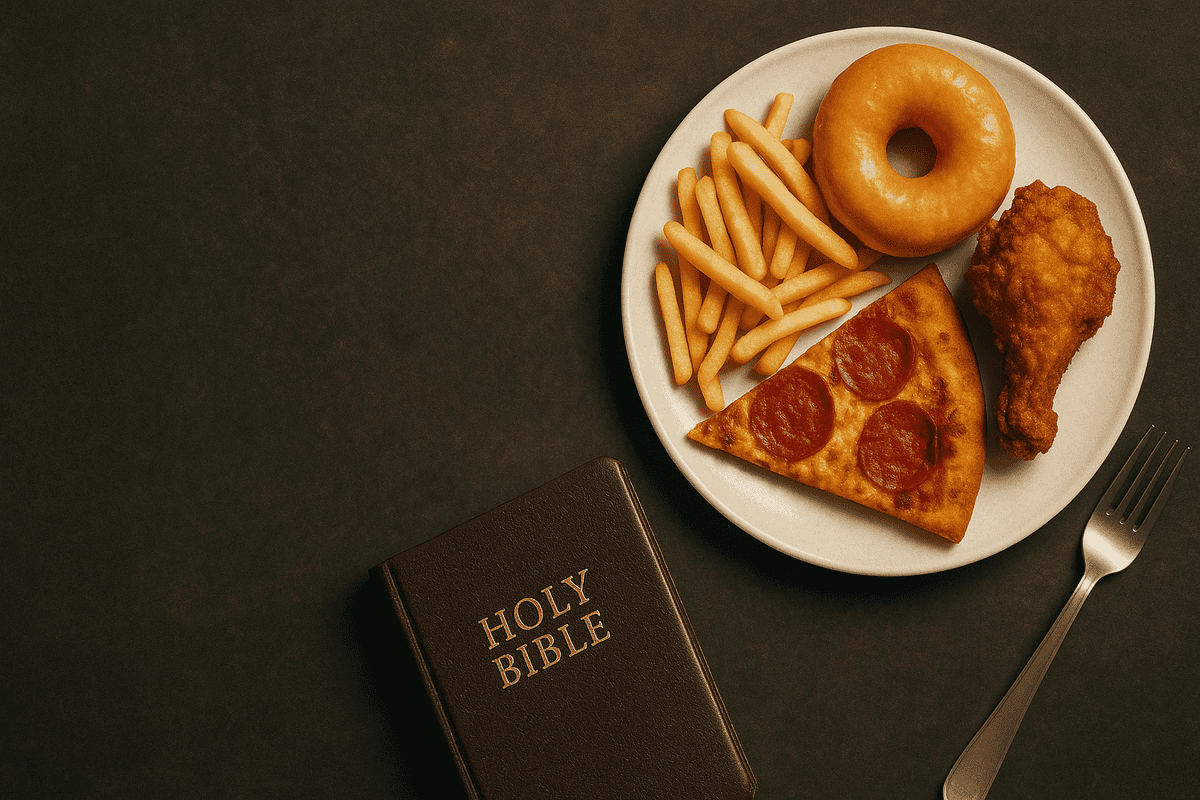
Most men think gluttony means just overeating. But the Bible shows it’s deeper than that. Gluttony is not just about how much food you eat, it’s about what controls you.
The Real Problem Behind Gluttony
When your stomach tells you what to do instead of your spirit, that’s gluttony. Are you eating to escape stress, boredom, or shame instead of turning to God, that’s gluttony. Has food becomes your comfort instead of Christ, it’s idolatry in disguise.
The Bible doesn’t treat gluttony as a small issue, it connects it to spiritual laziness, poor self-control, and even destruction.
“Do not join those who drink too much wine or gorge themselves on meat, for drunkards and gluttons become poor, and drowsiness clothes them in rags.” Proverbs 23:20-21
That verse hits hard. It warns that gluttony leads to poverty, not just financial, but spiritual and physical poverty. You lose energy, discipline, and purpose.
The Science Behind Self-Control
Research shows that consistent overeating rewires the brain’s reward system, dulling your ability to feel satisfied and increasing cravings (Yale Journal of Biology and Medicine, 2017). In other words, gluttony numbs your body the same way sin numbs your spirit, it breaks your ability to feel full.
God’s Design for Eating
Food was meant to fuel your mission, not fill your emptiness. God gave Adam seed-bearing plants, Daniel ate vegetables and water to honor Him, and Jesus fasted forty days to depend on the Father, not food. When you eat with gratitude and discipline, food becomes worship.
The Challenge
Before your next meal, pause and ask:
“Am I eating to glorify God or to comfort myself?”
Eat slow. Give thanks. Stop when satisfied. Discipline at the table builds strength in the soul.